
Plug in Solar is Coming to The UK
Low Cost Solar Panel Setups That Can Instantly Reduce Your Bills
Build Your SystemNo installers. No hassle. Just plug in and start saving.
Where can I install plug-in solar?
Plug in solar can be installed in a wide range of places depending on your requirements.
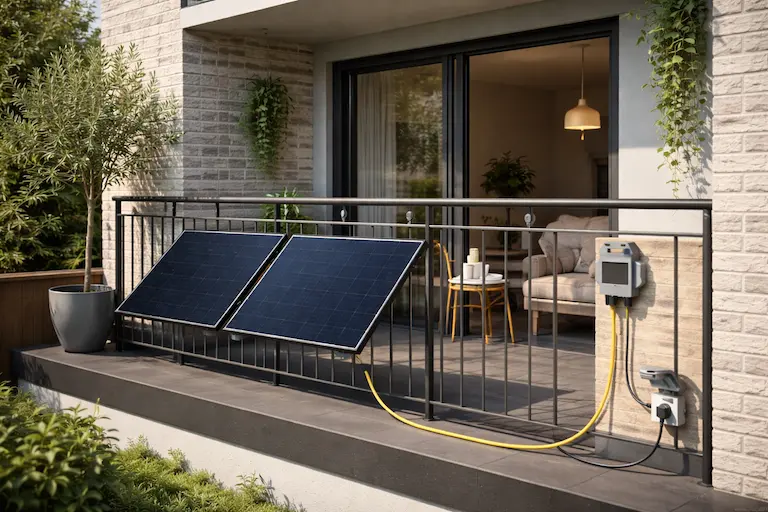
What is Plug In Solar
Plug-in solar is a simple, low cost way to install solar panels and start cutting down your electricity bills.
It’s suitable in a range of situations where traditional roof-top solar simply wouldn’t work:
- It can be installed by tenants who are renting
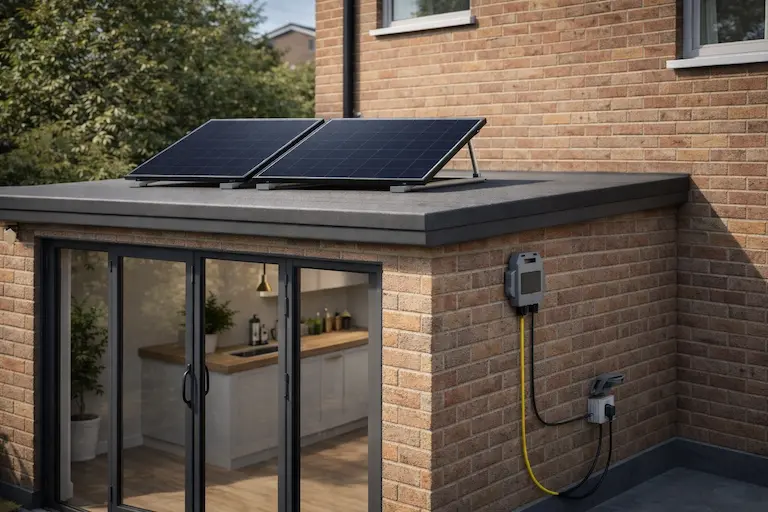
- It can be installed in properties where it just doesn’t make financial sense to have rooftop solar, such as buildings with awkward roof access or where only a couple of panels can be fitted.
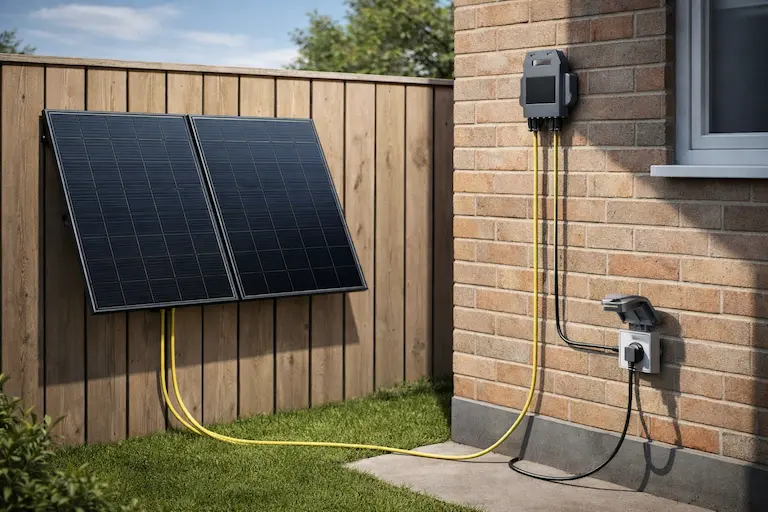
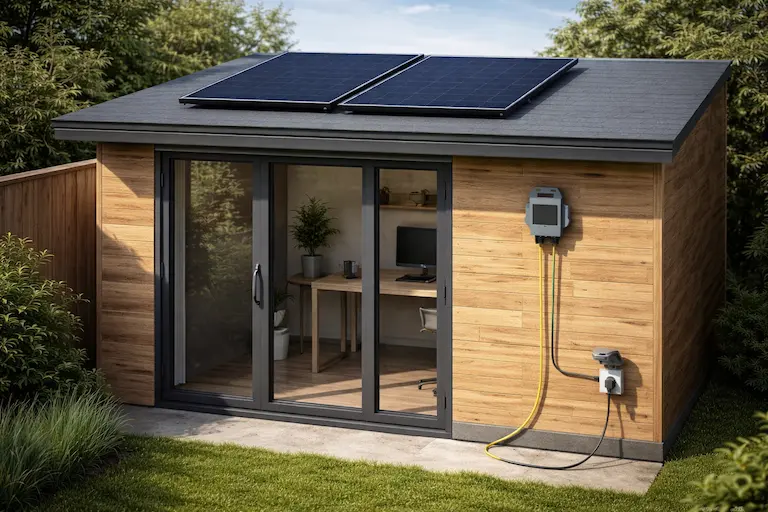
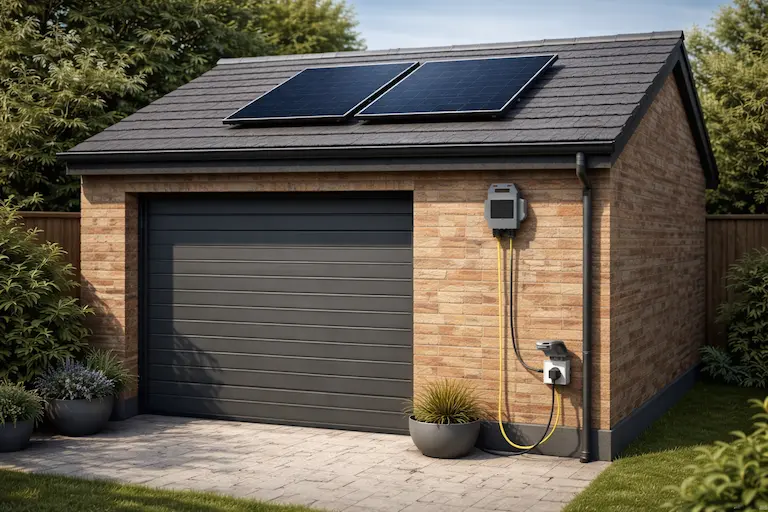
- It can be installed on outbuildings, like garages, sheds, home offices, garden rooms, pergolas and more.
What do I need to get Plug-In Solar
The requirements for plug-in solar are much more straightforward that having traditional solar panels installed. You just need:
- Somewhere to fit the panels securely, like a balcony, shed, outbuilding, fence or even just in your garden
- Access to a plug socket, either by running cables from the solar panels inside the building first, or with an outdoor socket.
That’s virtually all you need:
- No need to get approval from the grid for installation
- No need for an electrician in most cases
Plug in Solar vs Traditional Roof Solar
Advantages of Plug-in Solar
Plug-in solar panels allow you to quickly, simply and cheaply install solar panels and reduce your electricity costs.
It’s not a replacement to a traditional rooftop solar panel system - it has a different use case and can be installed by a range of users who have been excluded from the benefits of solar panels for a long time.
Disadvantages of Plug-in Solar
The main limitation of plug-in solar is the size of the system you can have. The maximum amount of power you can use from your solar panels at any time is likely to be 800W.
This means in reality, you won’t be able to replace all of the electricity you use from the grid with a plug-in solar setup.
Plug-In Solar Limitations
Energy Consumption of Typical Household Appliances
Here are some typical household appliances and how much they use:
| ☕ Electric Kettle: | 2,500W |
|---|---|
| 🥪 Toaster: | 1,200W |
| 🍽️ Microwave: | 800W |
| 👱♀️ Hair Dryer: | 2,000W |
Disadvantages of Plug-in Solar
The main limitation of plug-in solar is the size of the system you can have. The maximum amount of power you can use from your solar panels at any time is likely to be 800W.
This means in reality, you won’t be able to replace all of the electricity you use from the grid with a plug-in solar setup.
Frequently Asked Questions
Do I need an electrician for plug in solar?
The rules for plug-in solar are currently under review. As it stands (April 2026), plug in solar panels need to be on their own circuit which means you may just need an electrician to do the final connection to your fuse board.
The UK government is currently reviewing this and in the very near future, you should be able to simply ‘plug-in’ solar panels in the same way you would with any other appliance in your home.
Where can I buy plug in solar?
The UK Government is working on bringing plug-in solar products to supermarkets in the very near future, but there are already some products on the market that offer similar functionality.